
We are ready to take your call!

This class were named after different flower varieties, Saxifrage was named after the flower known as London Pride. She was launched on Tuesday 29 January 1918, and commissioned on Monday 25 March 1918. Employed as a Q-ship in the First World War, it was HMS Saxifrage’s duty to hunt U-boats and she would often lead the convoys and look out for enemy submarines.
SAXIFRAGE was built for convoy escort and anti-submarine duties to help keep the U-boat scourge at bay. She was one of a group of vessels commonly known as ‘Q-ships’. The aim was for the vessel to appear to be an ordinary merchant ship, but in fact to be hiding armaments such as 4-inch and 12-pounder guns ready to attack and take the enemy by surprise. The thinking was that a U-boat would be unwilling to use a precious torpedo on a small merchant ship, so would surface to sink her by gunfire or explosives, unaware that the merchant ship was heavily armed.
Most of the Q-ship crew would appear to be abandoning ship in panic, but a small team of naval officers would remain on board to remove the covers disguising the guns, and open fire on the U-boat once it was in range. U-boats would often send a team with explosives over in a small boat with the intention of sinking the merchant vessel. The role of Q-ships like SAXIFRAGE was to lure and sink the U-boats.
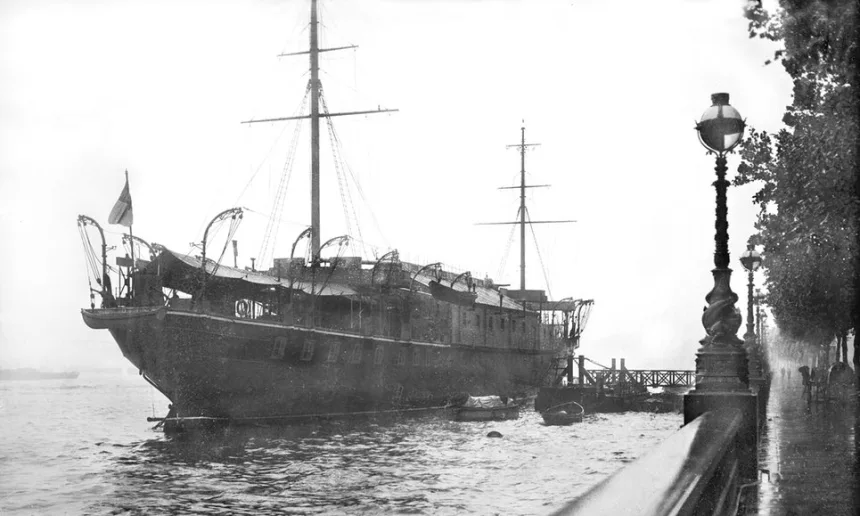

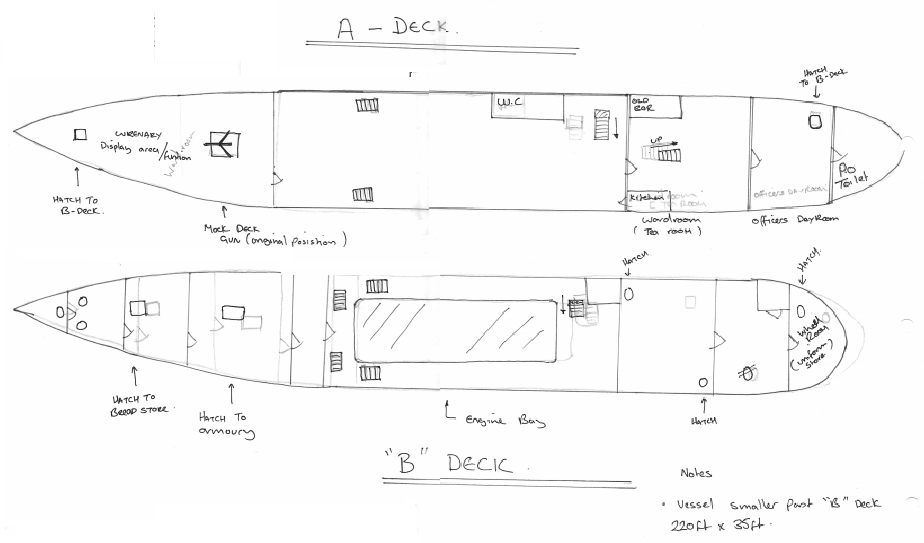
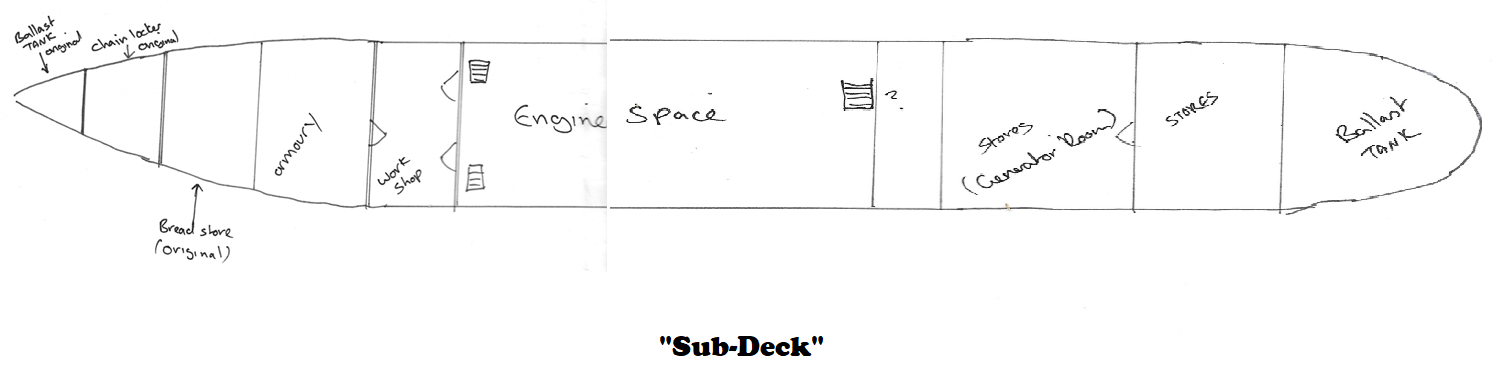
As an Anchusa-Flower class sloop, SAXIFRAGE had an overall length of 262.5ft, a beam of 35ft, and a draft of 13.7ft. Her gross tonnage was 1,290, and she was propelled by a 4-cylinder triple expansion engine, generating 2,500 hp (1.864 KW). She could carry 260 tons of coal, and a complement of 93 crew. However, using of dazzle camouflage by confusing their attackers the ships were painted using the bold stripes of animals like zebras and skunks.
In all the Brits used 366 Q-ships of which 61 were lost in action, as Saxifrage was commissioned with just nine months left in the war, she did not see a lot of action, escorting convoys around British waters but she was reported to have nine U-boat contacts, she was never able to take down one.
HMS Saxifrage was renamed and became a RNVR drill ship in 1922, when she was moored on the Thames Embankment in London. She had remained there ever since, as a constant backdrop to the river and the city. When she was a drill ship all naval officers employed in the Admiralty in London were nominally appointed to President.
During 1922 the Saxifrage was due to be scrapped but her sister ship the Marjoram that was intended to be the next RNVR President was wrecked whilst under tow to London and the Saxifrage was selected as her replacement. Her engines removed, she was tapped to become the training establishment HMS PRESIDENT replacing the former HMS Buzzard, a Nymphe-class composite screw sloop. Moored on the River Thames, she became RNVR President used as a drill ship by Royal Naval Volunteer Reserve.
Alterations to her physical fabric included fitting square windows on the lower decks and adding a top deck for parade, drilling and small arms gunnery practice. After her change of use to a training vessel, she boasted four decks, with internal spaces including the Captain’s Quarters, Drill Hall and adjacent Gunroom, Quarter Deck and Ward Room.
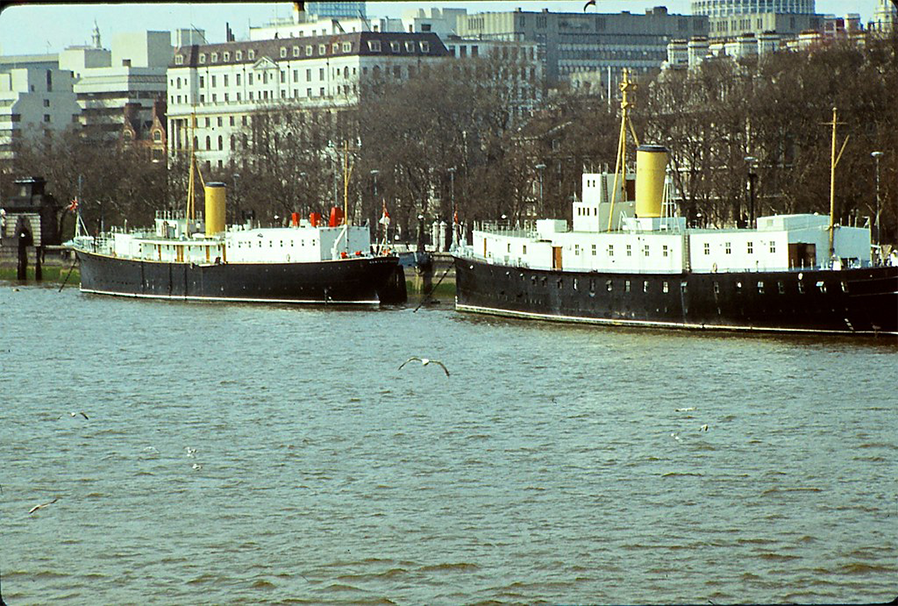
HMS Chrysanthemum, used as a target-towing vessel in Home Waters, was transferred to the RNVR 1938 and stationed on the Embankment in London next to President where she would remain until scrapped in 1995. President continued her role as a stationary training ship. One of President‘s main roles during the war was to train men of the Maritime Royal Artillery, soldiers sent to sea and serve with naval ratings as gunners on board defensively equipped merchant ships (DEMS).
In 1957 President went for a refit in Sheerness Royal Naval Dockyard, to become the training ship on the Thames after the Second World War. While she was being refitted the ships cat Peter (a good boy as reported by the Captain) went for a wander and vanished to be found near the gate looking like he was waiting for the ship as it had left the dry dock to be towed back to London, but when the Captain realised that Peter was missing he ordered the crew to search the dockyard for Peter. He was found safe and well, living a happy long life onboard President.
The name President is retained as a “stone frigate” or shore establishment of the Royal Naval Reserve, based on the northern bank of the River Thames near Tower Bridge in the London Borough of Tower Hamlets. In 1987, the old girl was donated to the President (London) Limited non-profit who has extensively refitted her for use in hosting private parties, weddings, receptions, etc. while somewhat restoring her appearance.




© Copyright 2026